How to Manage Site Drainage Around a Pool
AdminA Brisbane downpour can reveal problems that dry-weather inspections miss completely. Water may sheet across paving, sit against the house, wash soil from garden edges or find its way beneath pool surrounds. To manage site drainage properly, it needs to be planned as part of the entire backyard build - not treated as a final fix once the pool, paving and landscaping are already in place.
For homeowners investing in a new pool and outdoor area, good drainage protects more than the appearance of the finished space. It helps preserve structural works, keeps access areas safer after rain and gives your garden the conditions it needs to thrive through Brisbane’s wet summer months.
Start with how water moves across your block
Every drainage plan should begin with the block itself. On a flat site, the challenge is often creating enough fall for water to move away from buildings and usable outdoor areas. On a sloping block, runoff can gather speed and volume as it travels downhill, placing pressure on retaining walls, paved spaces and the lower part of the yard.
A proper site assessment considers existing ground levels, the location of the home, neighbouring properties, roof water outlets, soil conditions and the intended pool position. It also considers where water can lawfully and practically be directed. The aim is not simply to move water away quickly. It is to collect, control and discharge it without causing erosion, flooding or problems elsewhere on the property.
This early assessment is especially valuable when a pool is being built close to the home, at the base of a slope or alongside retaining walls. These are not reasons to avoid a backyard transformation. They are reasons to have the design, engineering and construction work coordinated from the outset.
Plan drainage before the pool and paving are installed
Pool construction changes the way a backyard handles water. Excavation, compacted base materials, concrete, paving and new garden beds all alter natural ground levels and runoff paths. A pool should therefore be designed with the surrounding landscape, not as a separate item dropped into the yard.
The finished levels around the pool need careful attention. Pool paving should fall away from the house and avoid creating low points where water can pond. At the same time, drainage needs to be designed so water does not wash through garden beds or concentrate against the pool shell, coping or adjacent structures.
This is where an end-to-end builder can make a real difference. Rather than asking separate trades to work around decisions made earlier, one team can coordinate excavation, retaining, drainage, paving, fencing, planting and finishing levels as one connected project. Wahoo Pool & Landscape Construction takes this approach because it reduces the gaps where drainage issues commonly begin.
Surface drainage handles the water you can see
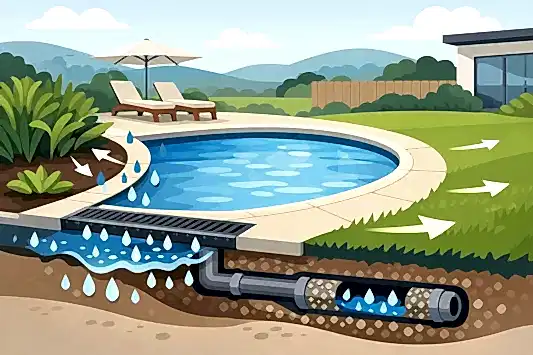
Surface drainage captures rainwater flowing across hard areas such as pool surrounds, patios, paths and driveways. Depending on the design, this may involve discreet channel drains, grated pits or carefully graded paving that directs water towards a collection point.
Channel drains are particularly useful near doors, along the edge of an alfresco area or where paving meets a retaining wall. They can prevent water from crossing an access path or collecting near the house. However, they need the right location and fall to work effectively. A drain installed at the wrong level can become a place where debris collects rather than a solution to runoff.
Grates should also remain accessible for cleaning. Leaves, mulch, grass clippings and pool-area debris can block a drainage point, so the practical maintenance of the system matters as much as its installation.
Subsurface drainage manages water below ground
Not all drainage issues are visible from the surface. Water can build up in soil behind retaining walls, beneath lawns or around landscaped sections after prolonged rain. If that water is not relieved, it can add pressure to structures, soften ground and create muddy areas that never seem to dry out.
Subsurface drainage, often using agricultural pipe and free-draining material, can collect this groundwater and direct it to an appropriate outlet. It is commonly needed behind retaining walls and may be required around parts of a sloping backyard, depending on the soil and site design.
This work is easy to overlook once the landscape is complete because most of it is hidden. Yet it is one of the most valuable parts of a well-built outdoor area. Installing drainage before garden beds, turf and paving are finished is far more efficient than excavating a newly completed yard to repair waterlogging later.
Retaining walls need a drainage strategy
A retaining wall is designed to hold back soil, but it should never be expected to hold back trapped water as well. During heavy rain, water can build behind a wall and increase the load it must carry. Over time, poor drainage may contribute to staining, movement, cracking or damage to the landscape above and below the wall.
The right solution depends on wall height, construction method, soil type and the amount of runoff moving through the area. It may include drainage pipe behind the wall, drainage aggregate, filter fabric and appropriately positioned outlets. Engineering and approvals may also be relevant, particularly for more substantial structural works.
It is tempting to see drainage behind retaining as an optional extra because it is buried and does not change the visual finish. In reality, it is part of the wall’s performance. A well-designed wall and drainage system work together to keep a sloping yard safe, usable and attractive over the long term.
Keep roof water separate from pool-area runoff where needed
Roof water can create significant flows during a storm, particularly on larger homes with wide roof areas. Downpipes that empty directly into a garden bed or beside pool paving can quickly erode soil and overwhelm a small surface drain.
As part of the site plan, identify every downpipe and where it discharges. Roof water may need to connect to a suitable stormwater system, rainwater tank or another approved method of management. The best option depends on the property and local requirements.
Avoid making assumptions based on what appears to work in dry conditions. A single intense summer storm can send a surprising volume of water through a downpipe. Planning for those peak events helps protect paving, planting and structural elements when they are under the most pressure.
Choose landscaping that supports drainage, not fights it
Landscaping can help water move and soak into the ground, but it must be designed with the site’s drainage pattern in mind. Garden beds can soften runoff, while healthy soil and suitable planting can reduce erosion. On the other hand, raised beds, dense edging and excessive mulch can redirect water towards the house or block intended flow paths if they are installed without regard to levels.
Turf areas also need a modest, consistent fall. A lawn that looks level may still need subtle grading so rainfall does not sit in the middle of the yard. In compacted clay soils, common across parts of Brisbane, drainage may be slower than expected. Improving soil structure and using appropriate drainage beneath problem areas may be more effective than repeatedly adding soil on top.
Near a pool, select planting and irrigation layouts carefully. Irrigation should not add unnecessary water to already damp areas, and garden edges should be detailed so soil and mulch do not wash onto paving or into drains. The goal is a landscape that looks established and lush without becoming difficult to maintain after every storm.
Check the finished yard before the wet season
Once construction is complete, drainage still benefits from occasional checks. After the first substantial rainfall, walk through the backyard and look for water pooling near doors, along pool coping, at the base of retaining walls and in lawn corners. Watch whether drains clear quickly and whether runoff is carrying mulch or soil onto hard surfaces.
Small adjustments can be straightforward when identified early. Clearing a blocked grate, reshaping a garden edge or improving a localised low point is far easier than waiting for repeated water exposure to cause damage.
For a new pool or major landscape upgrade, ask your builder to explain the drainage approach before work begins. You should understand where surface water will travel, how retaining walls will be drained, how finished levels relate to your home and what maintenance the system will require. That conversation brings confidence to decisions that will sit beneath and around your finished backyard for years.
A beautiful pool area should feel just as dependable after a Brisbane storm as it does on a clear summer afternoon. When drainage is designed into the project from day one, your family can spend more time enjoying the backyard and less time managing the water after the rain.